Two saunas can hold identical thermometer readings and feel completely different. One will be enveloping and even; the other will roast your scalp while your feet stay cold. The difference is almost never the heater. It is geometry.
The löyly zone
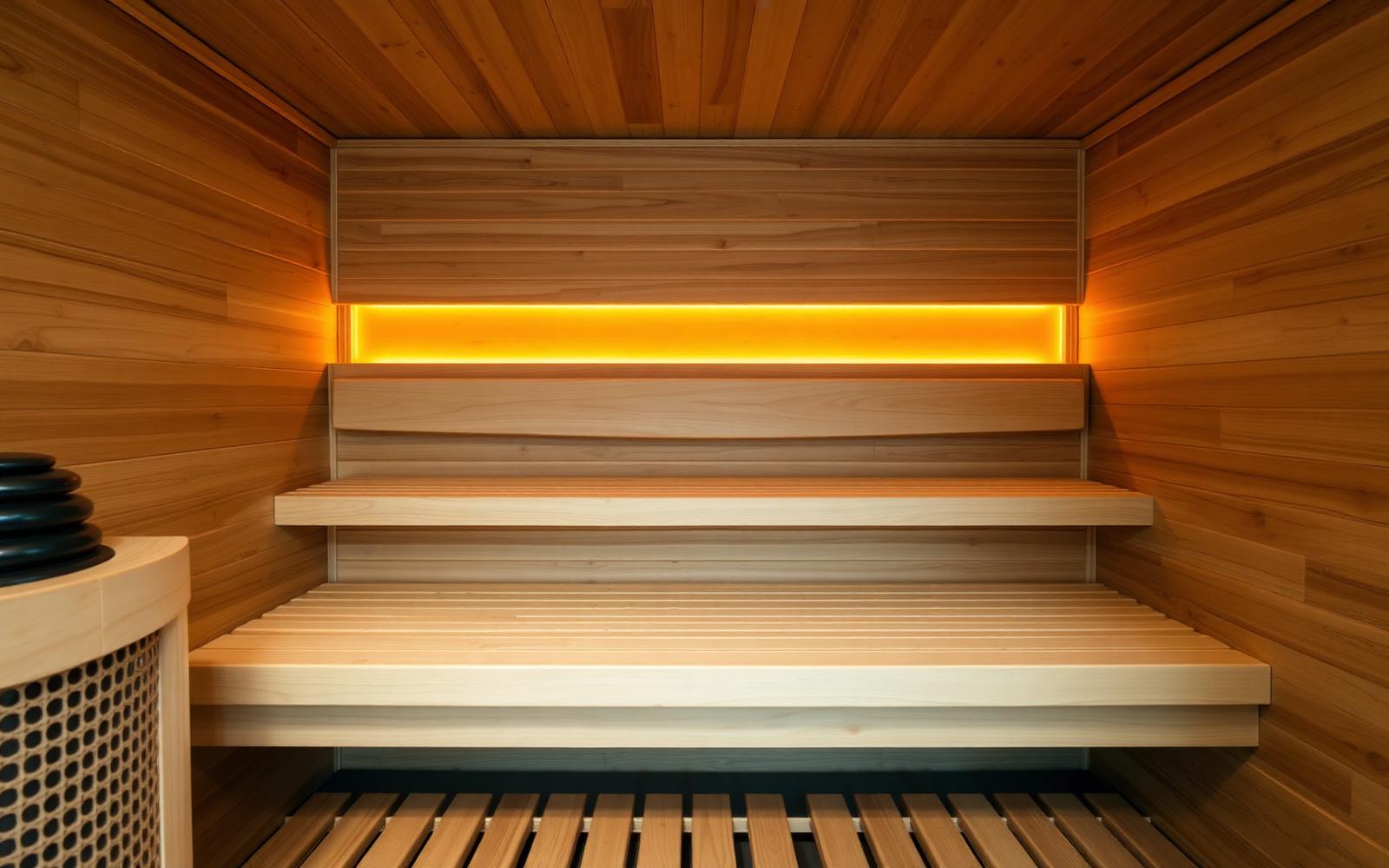
Hot air stratifies. In a working sauna there can easily be 30–40°C between ankle height and ceiling height. The band of usable, even, humane heat — the löyly zone — sits in the upper third of the room. The design task is to place the upper bench so that a seated body is entirely inside that band, from feet to shoulders.
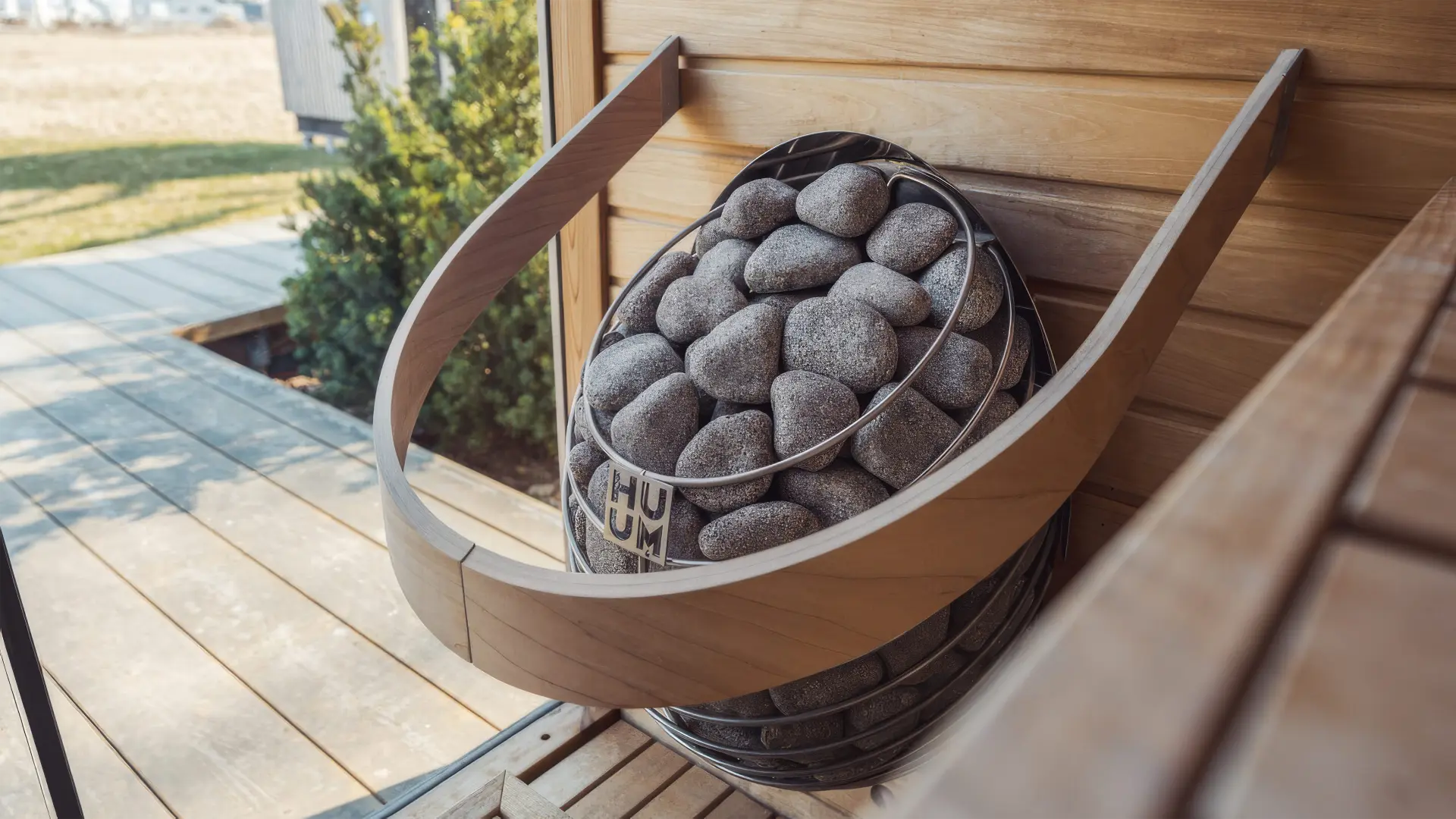
This produces the single most important rule in sauna design: the top of the heater's stones should sit at or slightly above the level of the upper bench, and the upper bench should sit roughly 1.0–1.2m below the ceiling. Ceilings above about 2.3m simply create a reservoir of heat nobody can sit in, and cost energy to maintain.
Dimensions we work to
| Element | Dimension | Why |
|---|---|---|
| Ceiling height | 2100–2300mm | Keeps the löyly zone within reach of the upper bench |
| Upper bench height | 1000–1150mm above floor | Places torso and head in even heat |
| Bench-to-ceiling gap | 1000–1200mm | Enough headroom seated, no wasted heat above |
| Upper bench depth | 600mm seated, 900mm+ to recline | 600mm supports thighs; 900mm allows lying |
| Lower bench / step | 400–450mm above floor | Comfortable footrest and a cooler seat |
| Bench length per person | 600mm seated, 1900mm lying | Real elbow room, not catalogue minimums |
| Slat gap | 8–10mm | Air movement and drainage without pinching |
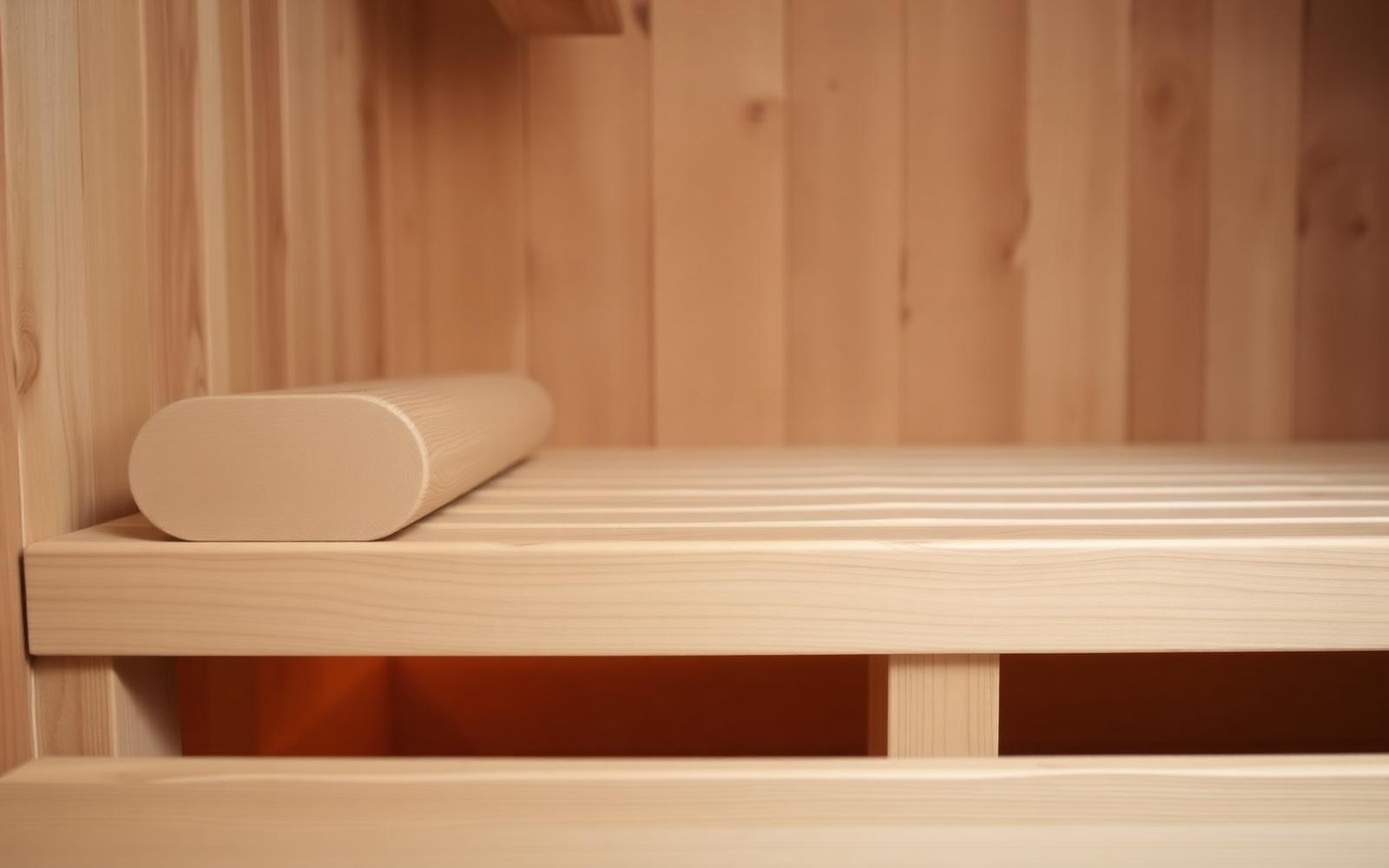
The lower bench is not a lesser seat. It is a genuinely different climate — often 15–20°C cooler — which is what allows two people with different tolerances to share a session, and what gives you somewhere to sit out a hard round without leaving the room.
Backrests and the shape of a spine
A vertical wall behind a bench is uncomfortable within four minutes. A backrest set at 10–15° from vertical, with its lowest slat lifted 100mm clear of the seat so the pelvis can settle back, transforms a twelve-minute round. It is a small piece of joinery with an outsized effect, and it is the detail most often omitted from off-the-shelf cabins.
Round every edge a body meets. A 12–15mm radius on the front edge of a bench is the difference between a seat and a shelf. Headrests should be removable so they can be washed, and shaped rather than flat.
Airflow: the invisible half
Comfort at temperature depends on gentle air movement. The conventional arrangement is an inlet low near the heater, drawing fresh air in and up over the stones, and an outlet on the opposite side, low down, ideally with an adjustable vent — so air is pulled the full length of the room and across the occupants at bench level rather than escaping straight out of the ceiling.
Get this wrong and the room feels stale and heavy at exactly the point in a session when you want it to feel clean. Get it right and a 90°C sauna feels light enough to sit in for twenty minutes.
Fixings, floors and the details you feel later
- No exposed metal on any surface skin touches. Fix benches from beneath, always.
- Bench modules should lift out for cleaning; nothing should be permanently sealed to the floor.
- Duckboard or a slatted floor section underfoot at the upper bench keeps feet off cold substrate.
- Allow a 20mm gap between benching and the wall so water and air can move behind.
None of this is visible in a photograph. All of it is the reason one sauna gets used four times a week for fifteen years and another quietly becomes storage.