Every client asks about heaters early, and the technical answer is less useful than the honest one: the heater sets the tempo of the whole ritual. Choose it by the evening you want, then check the practicalities.
Electric
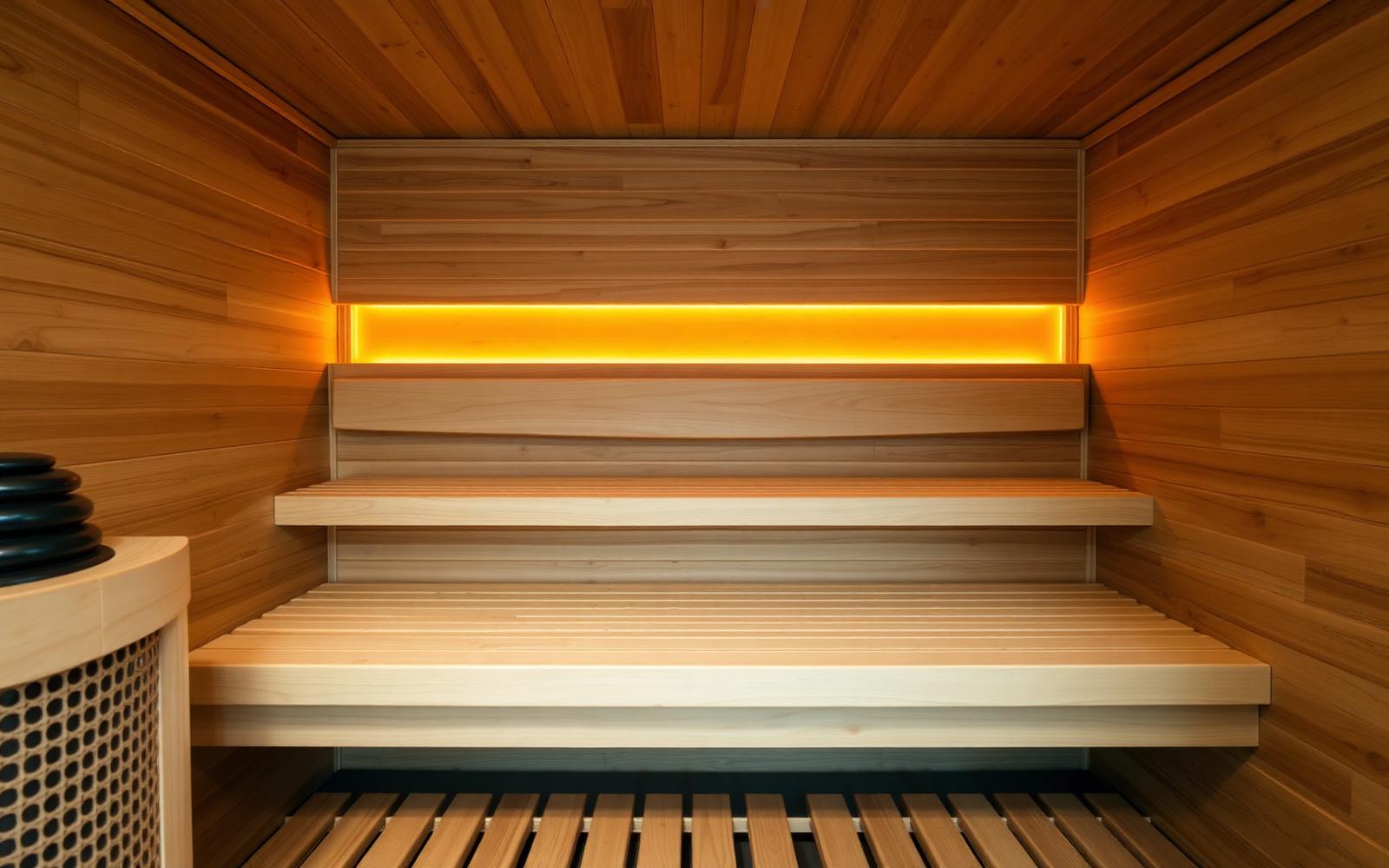
An electric heater is precise, quiet and instant in the way modern life is instant. Set a temperature, come back in thirty to forty minutes, and the room is exactly as you left it last time. Many units can be timed or controlled from a phone, so a sauna can be ready when you get home.
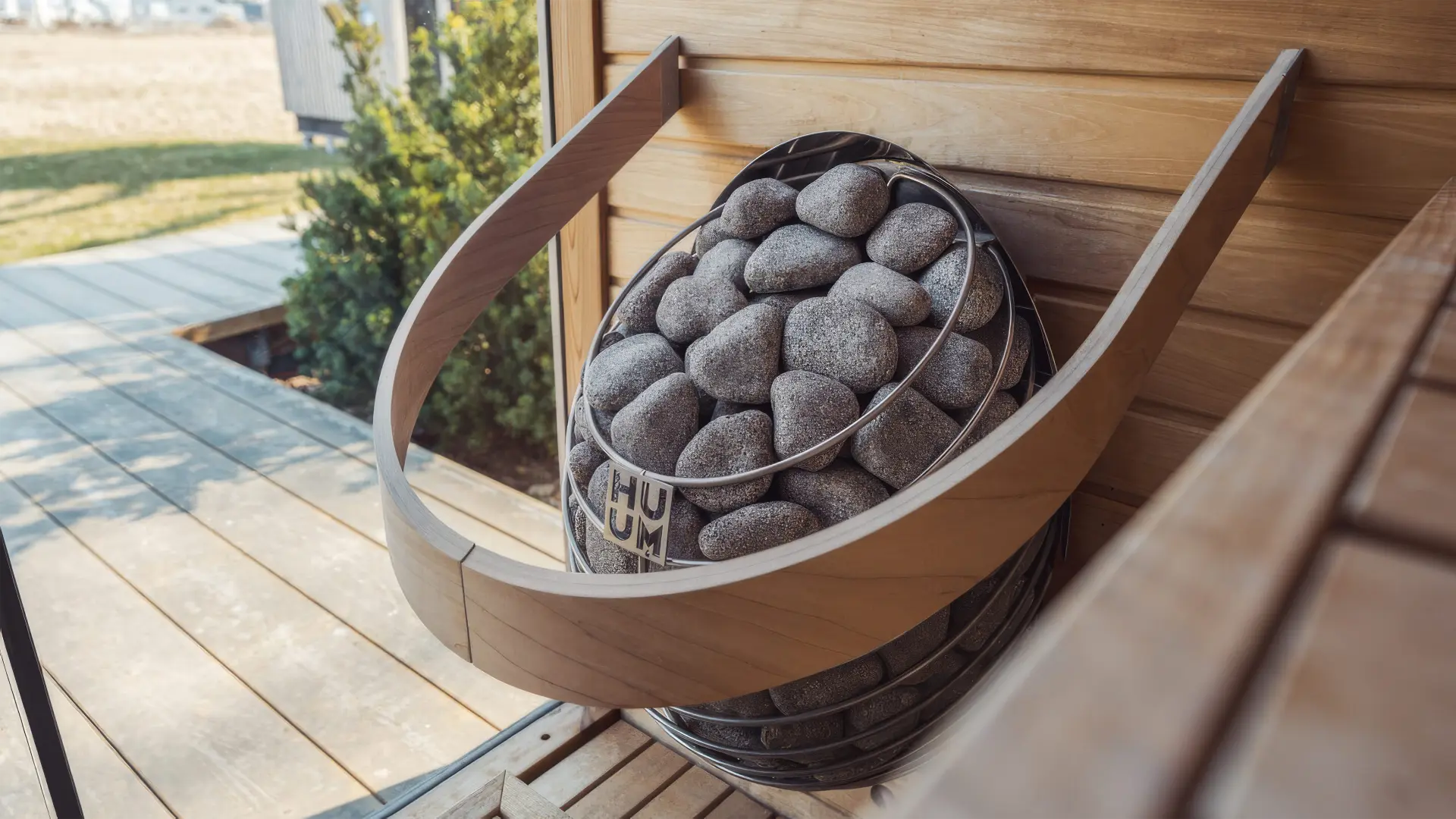
The heat itself is clean and easy to control, and the stone mass determines how good the löyly is: a heater with a generous stone load produces softer, more forgiving steam than a low-mass unit at the same temperature. If you go electric, buy stone mass.
- Best for: frequent, midweek, spontaneous use; smaller gardens; anyone who wants zero preparation.
- Needs: a dedicated certified circuit, typically 6–9kW for a domestic outdoor cabin.
- Trade-off: no flame, no smell, no ritual of building a fire.
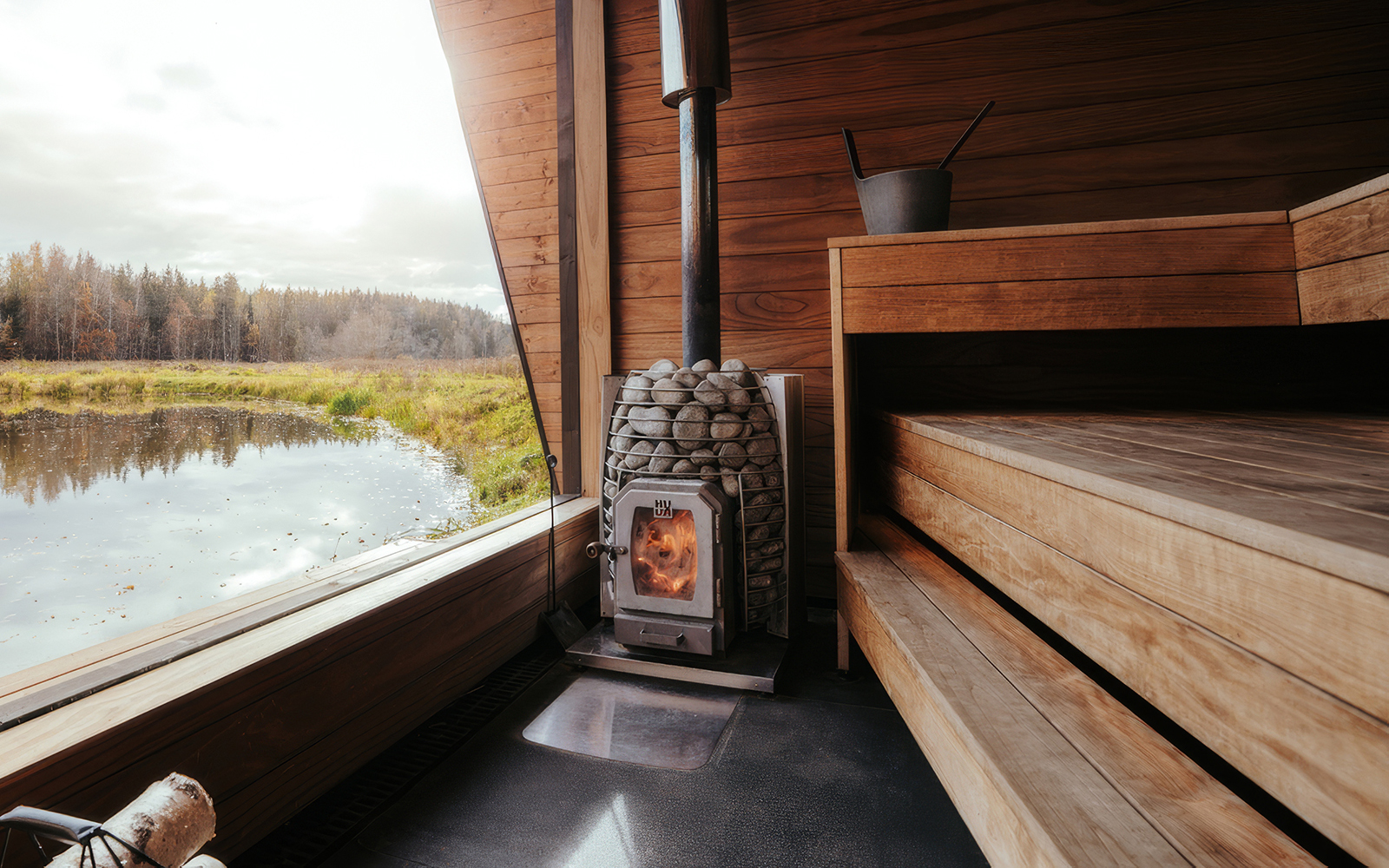
Wood-fired
A wood stove is the traditional article, and the experience begins forty-five minutes before you get in. Splitting, laying, lighting, watching. Many people find that preamble is half the value — it is the part of the evening that is genuinely unhurried.
The heat is different too. Wood-fired stoves usually carry a large stone mass and radiate a soft, deep, slightly variable warmth that most enthusiasts prefer. There is the smell of woodsmoke, the sound of the fire, and, with a glass door, the light of it. In an outdoor garden building, unlike a house, it is also completely uncomplicated to ventilate.
- Best for: weekend rituals; larger gardens; anyone who wants the fire as part of the experience.
- Needs: a compliant twin-wall flue, correct clearances to combustibles, a hearth, dry log storage, and — in a smoke control area — an appropriate exempt appliance and dry, low-moisture fuel.
- Trade-off: preparation time, ash management, and you cannot decide to use it in five minutes.
Hybrid
A hybrid installation means both: a wood stove for weekends and an electric heater for the other five days. It costs more, takes more space, and it is the specification we most often recommend to households where one person is a purist and another simply wants to be warm on a Wednesday.
It also solves a real problem in British weather. A wood fire in horizontal February rain is romantic once and tedious the fourth time.
Sizing, briefly
As a rough guide, allow roughly 1kW of electric heater output per cubic metre of cabin volume, then add for uninsulated glazing — a large picture window can add the equivalent of 1.5–2 cubic metres. Undersizing is the more common error and produces a sauna that never quite gets there. Manufacturer volume ranges assume a well-insulated cabin; if yours is heavily glazed, size up.
Running cost and reality
Costs move with tariffs, so treat any fixed figure with suspicion. The useful arithmetic is this: an electric heater draws close to its rated output while heating and then cycles at perhaps 30–50 per cent while maintaining. A 45-minute heat-up plus a 60-minute session on a 8kW unit therefore consumes something in the region of 8–10kWh. Multiply by your unit rate. Wood cost depends entirely on whether you buy kiln-dried by the crate or season your own.
Stones — the part nobody asks about
Stones are consumable. Peridotite and olivine diabase are the standard because they tolerate thermal shock; they should be stacked loosely, never packed, so air can pass through, and they need replacing every one to three years depending on use. Crumbling stones are the most common cause of a sauna that has quietly stopped producing good steam.
If in doubt: choose electric if you want a habit, wood if you want an event, and hybrid if you want both and have the space.