Shou Sugi Ban — more accurately yakisugi — is the Japanese practice of charring the surface of cedar boards before using them as cladding. It is several centuries old, it was developed as a practical measure rather than an aesthetic one, and it happens to produce one of the most beautiful exterior surfaces available to a garden building.
What charring actually does
Burning the outer layer converts it to a thin carbon crust. Carbon is not food for fungi or insects, and it holds far less moisture than raw timber, so the two main mechanisms of timber decay are both slowed at the surface. The char layer also weathers slowly and evenly, and it reduces the wood's tendency to check and split under UV.
It is worth being precise about the fire question, because it is often overstated. A charred surface is not a fire rating. Charring does slow the initial spread of flame across a surface, and building science has long recognised that a char layer insulates the timber beneath it — that is why heavy timber structures behave predictably in fire. But if a specification requires a tested reaction-to-fire classification, that comes from a certified treatment and a test report, not from the aesthetic itself. We say so plainly to clients rather than let the myth do the selling.
Three depths, three characters
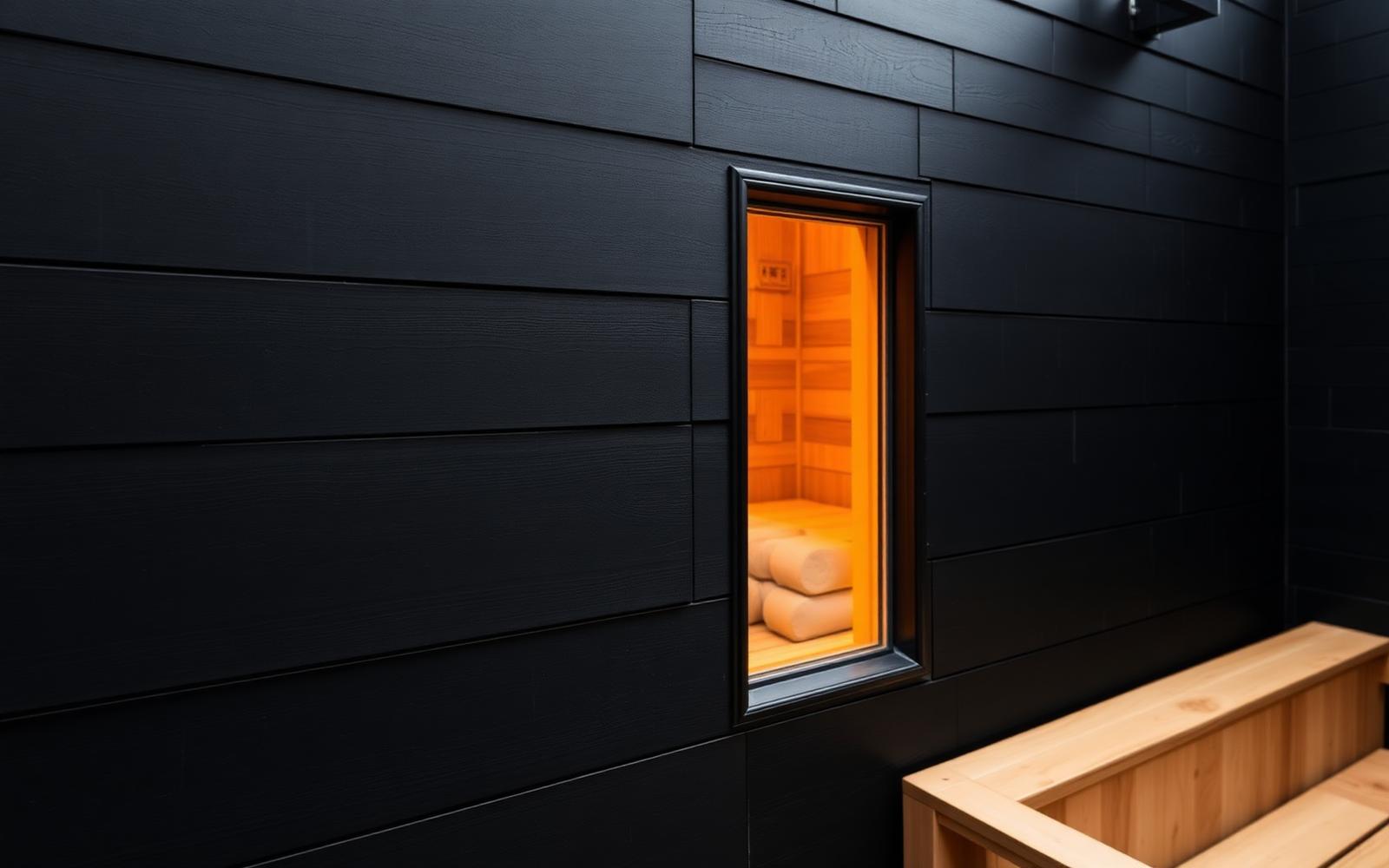
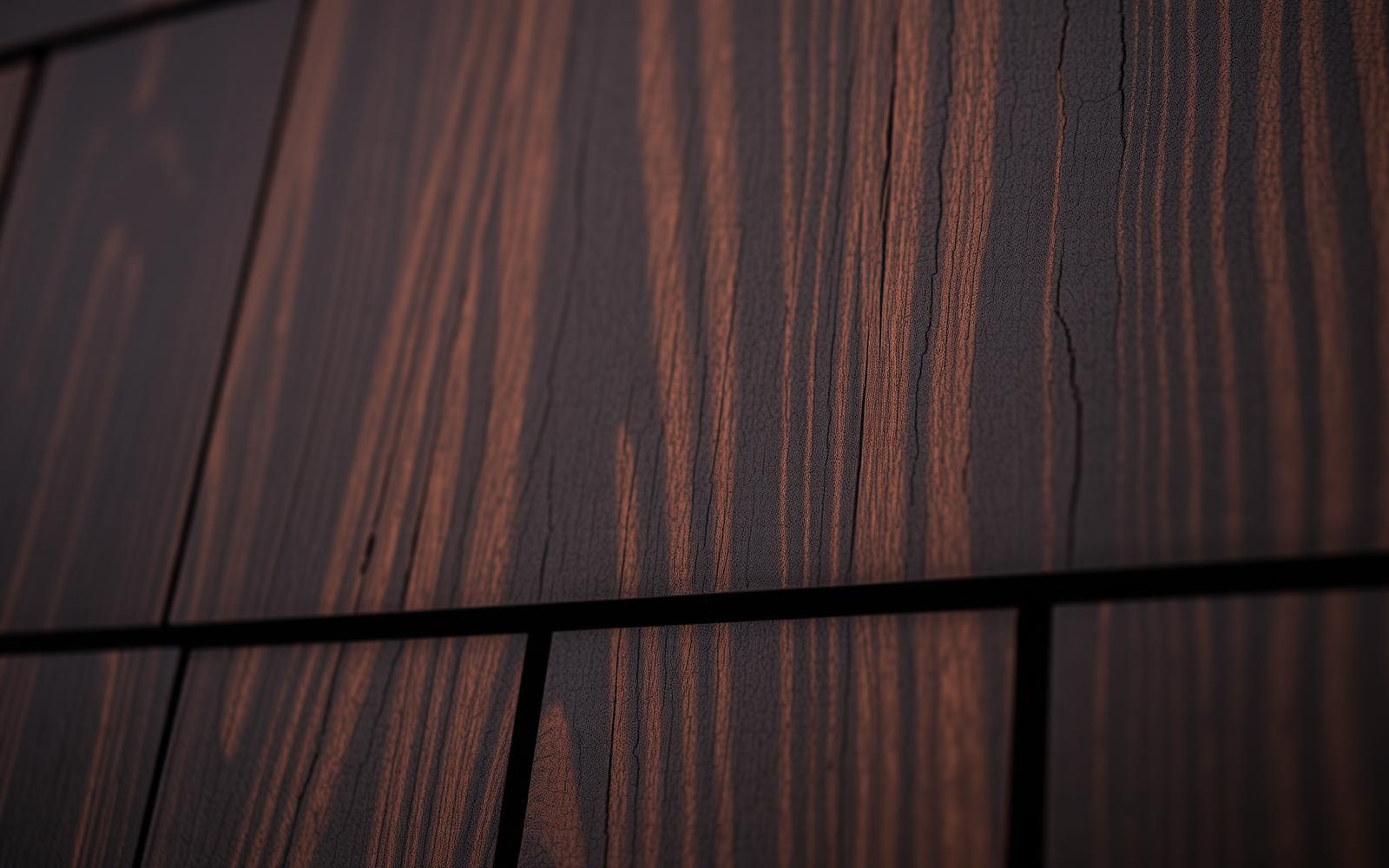
- Light char, brushed and oiled: the grain stays fully legible, the colour is deep espresso-brown rather than black, and the surface is smooth enough for a door or a hand-touched face.
- Medium char, brushed: the classic. Grain rises into relief, colour sits between charcoal and black, texture is tactile but not fragile.
- Deep char, unbrushed: the dramatic alligator-skin crocodile finish. Extraordinary in raking light, but it will mark clothing and it is best kept above hand height or on surfaces that are looked at rather than touched.
We most often specify a medium char, brushed once and finished with a penetrating oil. It is the version that stays looking deliberate for the longest, and it is comfortable to live alongside.
How it ages
In the first year, expect the surface to settle. Loose carbon washes off in rain — sensibly, do not plant white gravel directly beneath a new charred wall in the first winter. From year two the surface stabilises and the colour begins a slow shift from black towards a very deep grey-brown, faster on the elevations that take the most sun and rain.
By year eight to ten, an oiled medium char on a sheltered elevation still reads convincingly black; a south-west elevation will have softened noticeably. Both are handsome. What matters is knowing that it changes, and choosing it because you like the ageing rather than in spite of it.
Maintenance, honestly
Charred cladding is low maintenance, not no maintenance. A rinse with clean water once a year removes atmospheric grime. Re-oiling every three to five years — more often on the sunniest face — restores depth and slows fading. If a board is damaged, individual boards can be replaced and will blend within a couple of seasons.
The one thing to avoid is a pressure washer. It will strip the char and expose raw timber in a stripe you will look at for years. A soft brush and a hose is the whole toolkit.
Why it suits a British garden
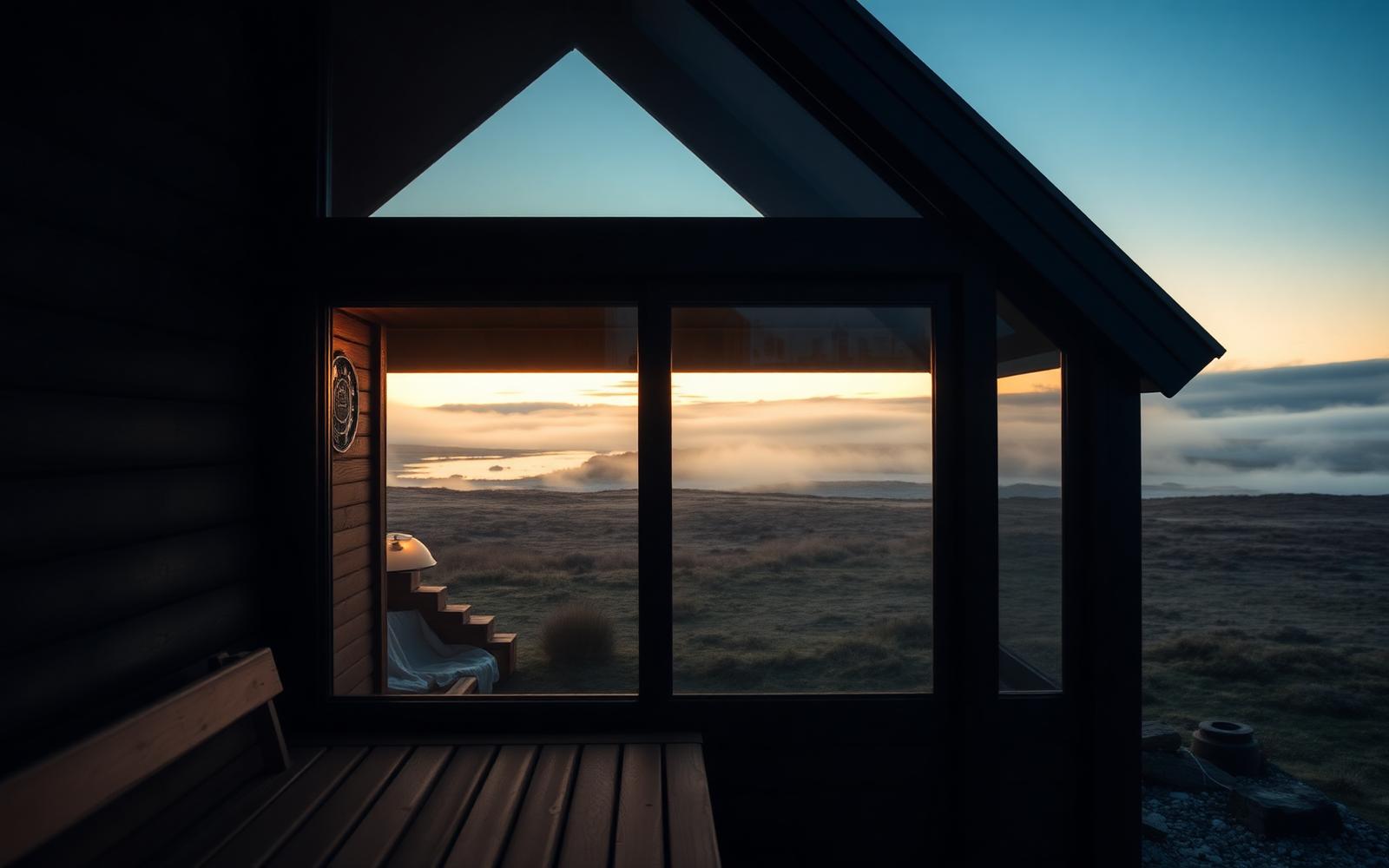
A black building disappears into a garden in a way a pale one never does. Against winter grasses, wet lawn and a low grey sky, charred cladding reads as depth rather than object — and it makes everything planted in front of it look better lit. Add a single warm window and you have the entire Nordic proposition in one elevation: dark, quiet, and glowing.