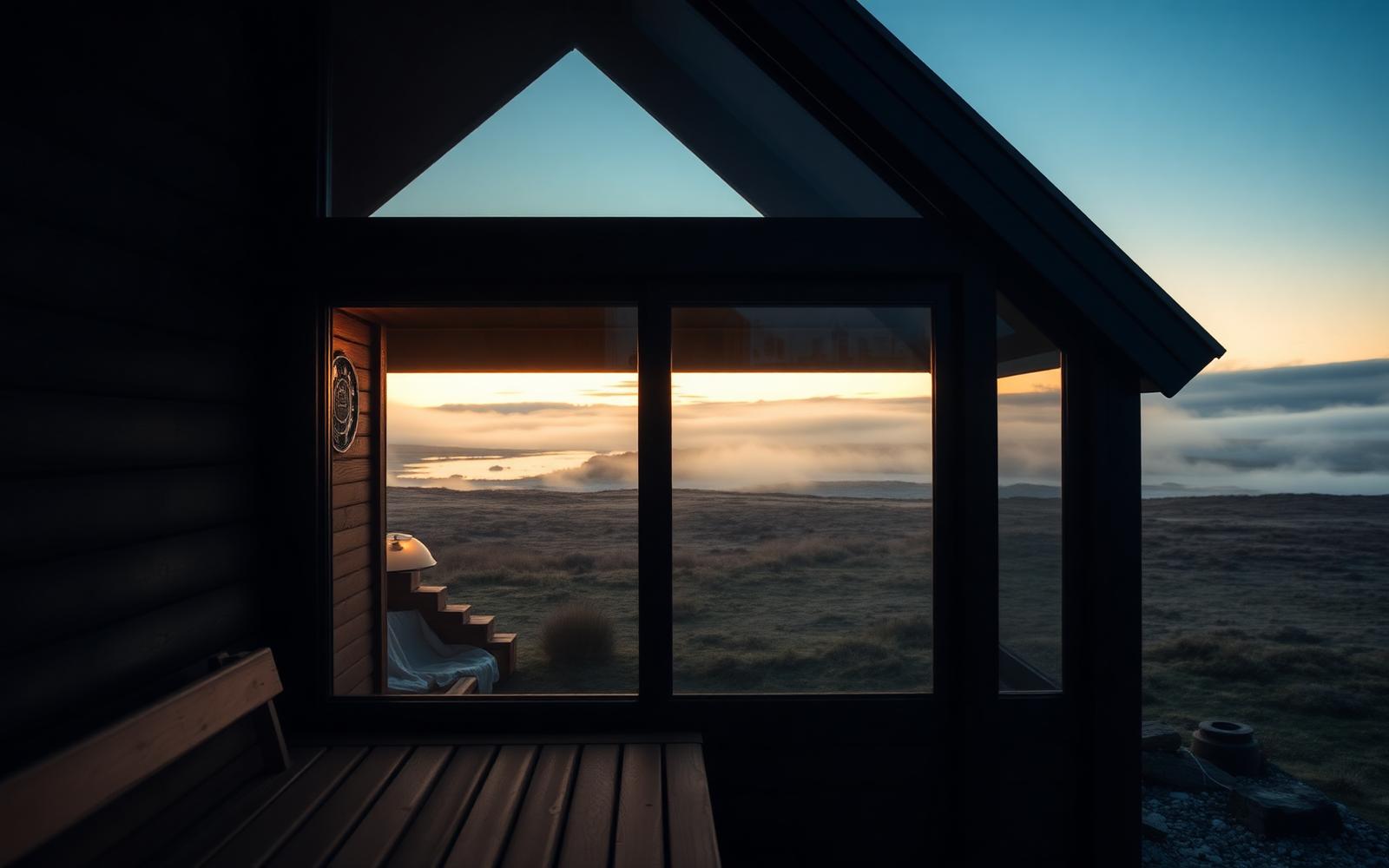
The traditional Finnish sauna is a dim, enclosed, inward room, and that darkness is part of why it works. The contemporary Nordic sauna is often the opposite: a warm box with one glass wall opened onto a landscape. Both are legitimate. What is not legitimate is drifting into the second by accident and wondering why the cabin never gets hot.
What a window costs
Insulated sauna glazing is a fraction as thermally efficient as an insulated timber wall. In practical terms, a large picture window can add the equivalent of one to two cubic metres to your heating requirement and will noticeably slow heat-up. It also creates a cold radiant surface: sit directly facing a big pane in January and you will feel it on your skin even at 85°C.
None of this is an argument against glass. It is an argument for deciding how much you want, sizing the heater accordingly, and positioning benches so nobody sits with their back or face hard against the glazing.
Specification
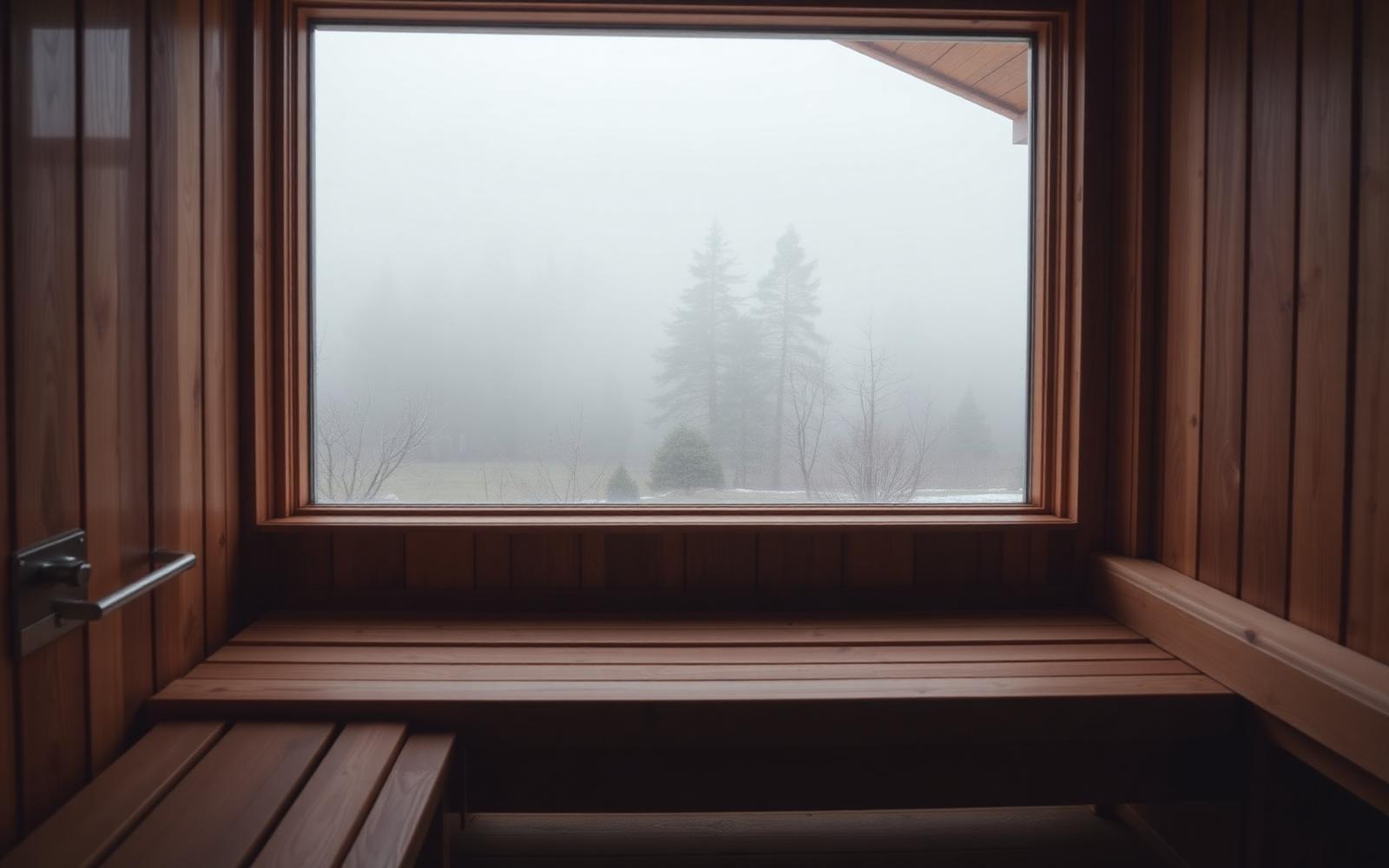
- Toughened safety glass throughout, always. In a sauna this is not negotiable.
- Double-glazed sealed units rated for the temperature differential; single glazing will stream with condensation and bleed heat.
- Bronze or grey tinted glass reduces daytime glare and, usefully, reduces the mirror effect at night.
- Frameless or minimally framed detailing keeps timber away from the thermal bridge and looks considerably better.
- A full-height glass door borrows a view without the heat penalty of a second window.
The reflection problem
At night, any glass with a bright interior behind it becomes a mirror. This is the most common disappointment in glazed saunas — you built a window onto the garden and you can see only yourself. There are three fixes and they work best together: keep the interior lighting genuinely low and concealed; specify tinted glass; and put a small amount of warm light outside, eight to fifteen metres away, on a tree or screen.
You do not solve a reflection by brightening the room. You solve it by lighting what you want to look at.
Framing rather than exposing
A view is more powerful edited than total. A single well-placed window that frames one tree, one stretch of water or one line of hedge is almost always more affecting than a glass wall showing everything including the neighbour's trampoline. It also solves privacy without a blind, and it costs less.
Set the sill low. A seated eye-line on an upper bench is around 1.4–1.5m above the floor, and the most common glazing error is a window set at standing height, which shows a seated bather nothing but sky.
Volume, proportion and the ceiling
Glazing changes how volume reads. A small cabin with one large window feels generous; the same cabin fully clad feels intimate. Neither is better, but they suit different people, and the decision should be made deliberately at sketch stage rather than discovered on site.
Keep the ceiling low regardless. A tall glazed sauna is a beautiful drawing and a poor room: the heat gathers where nobody sits and the glass takes it away. 2.1–2.3m, with the upper bench a metre or so below it, remains the geometry that works — however much glass you put in the wall.
Every Löyly&Stone cabin is drawn around a specific view on a specific site. If you are considering glass, start with where you will sit and what you want to see from there — the specification follows from that, not the other way round.