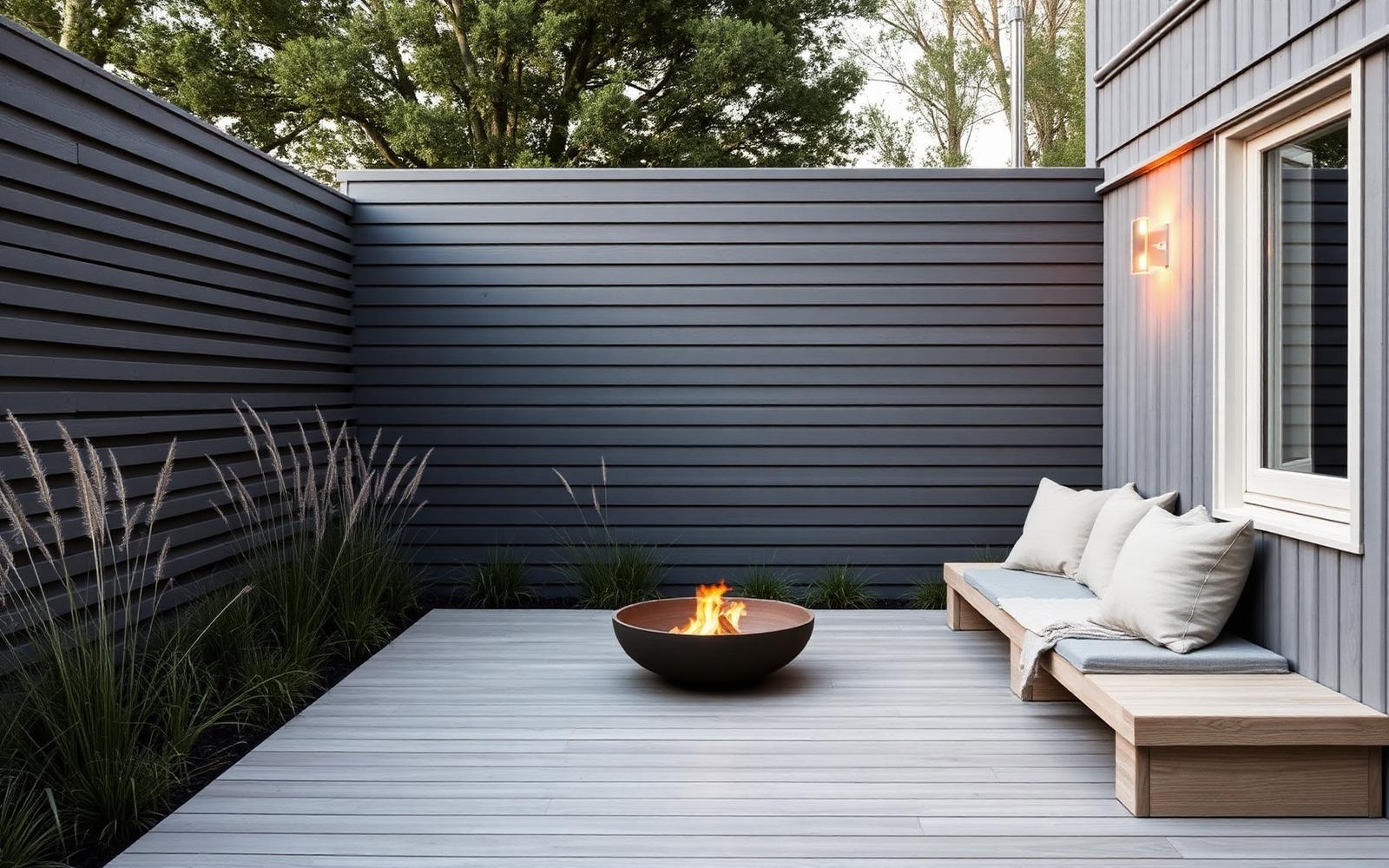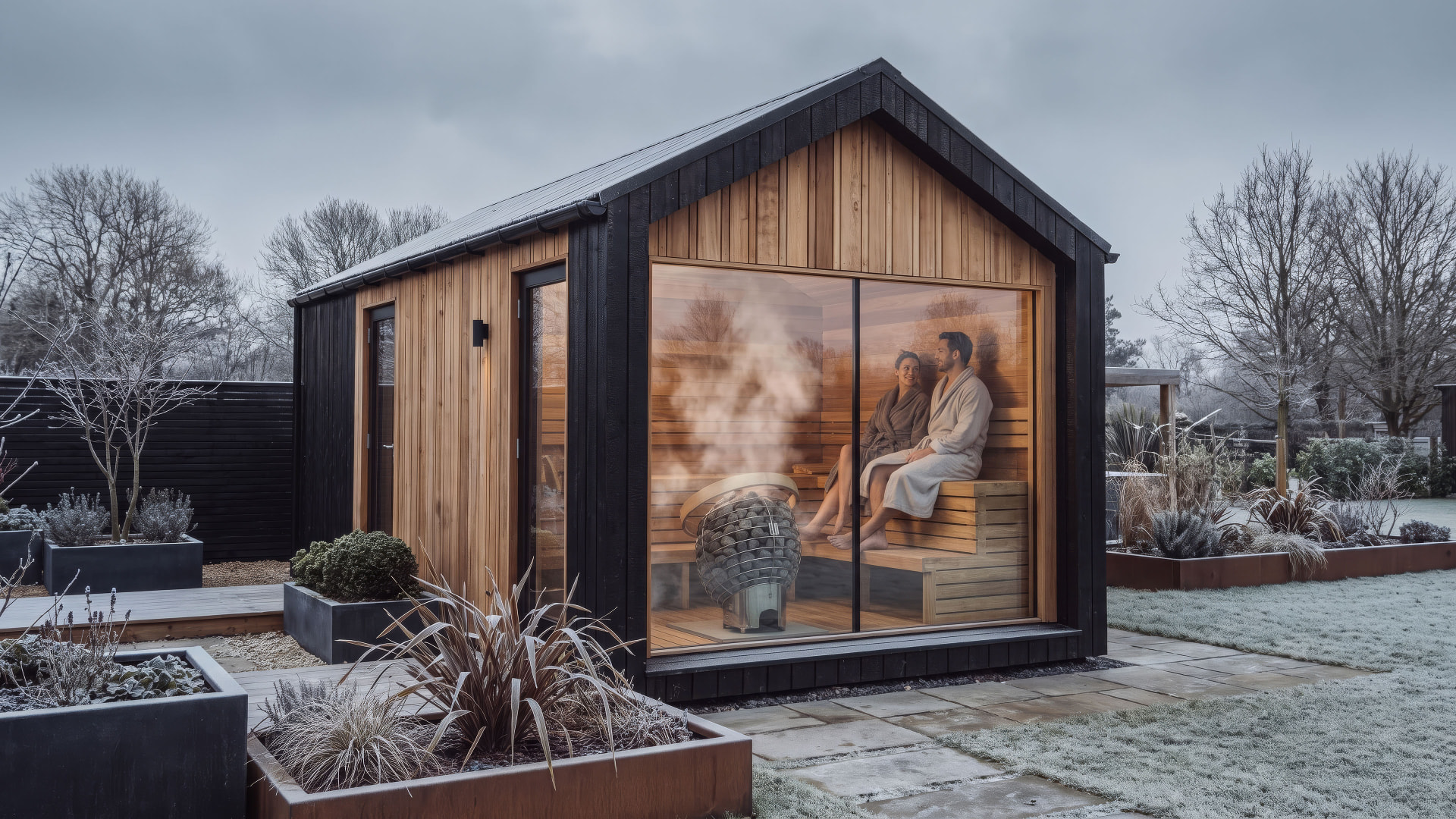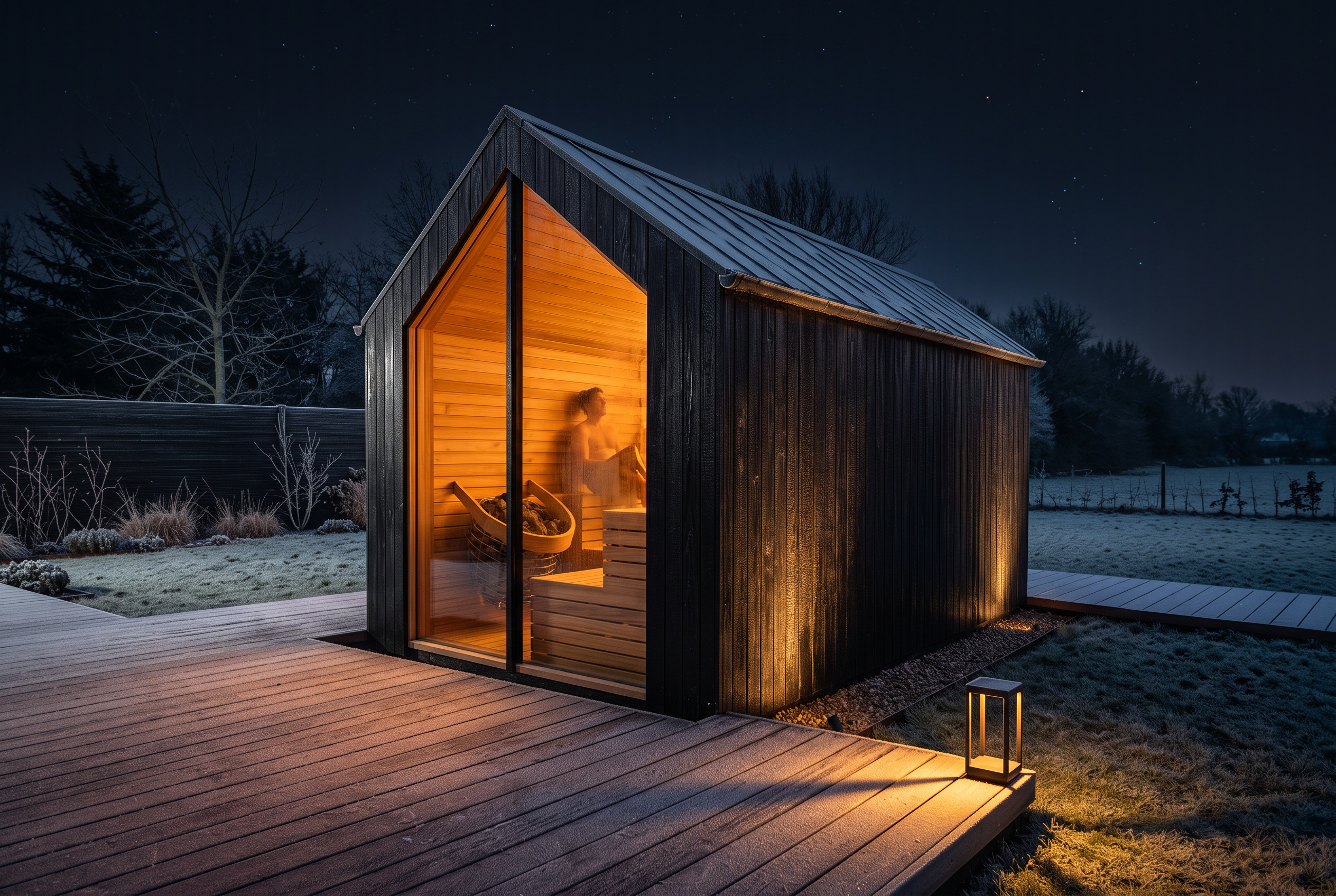
In the British winter, a garden is dark by four in the afternoon and stays dark until eight the following morning. For sixteen hours a day, whatever you have built is defined entirely by how it is lit. And yet lighting is almost always the last line of a project budget, specified in a hurry, and solved with the brightest fittings available.
The Scandinavian approach treats darkness as a material rather than a problem. You are not trying to replace the day. You are trying to place a handful of warm, low, quiet lights inside the dark so that the space has depth, a route, and somewhere to arrive.
Three rules that do most of the work
- Light surfaces, never eyes. If you can see the lamp itself, the fitting is wrong or aimed wrong.
- Keep it low. Most garden lighting should sit below knee height — step lights, in-grade uplights, low bollards.
- Stay warm. 2200K to 2700K. Anything cooler reads as security lighting and kills the atmosphere instantly.
Colour temperature is the single decision most often got wrong. The difference between 2700K and 4000K costs nothing, takes no extra fittings, and is the whole difference between a garden that feels like a hotel courtyard and one that feels like a supermarket car park. If you specify one thing carefully, specify this.
Layering: route, edge and destination
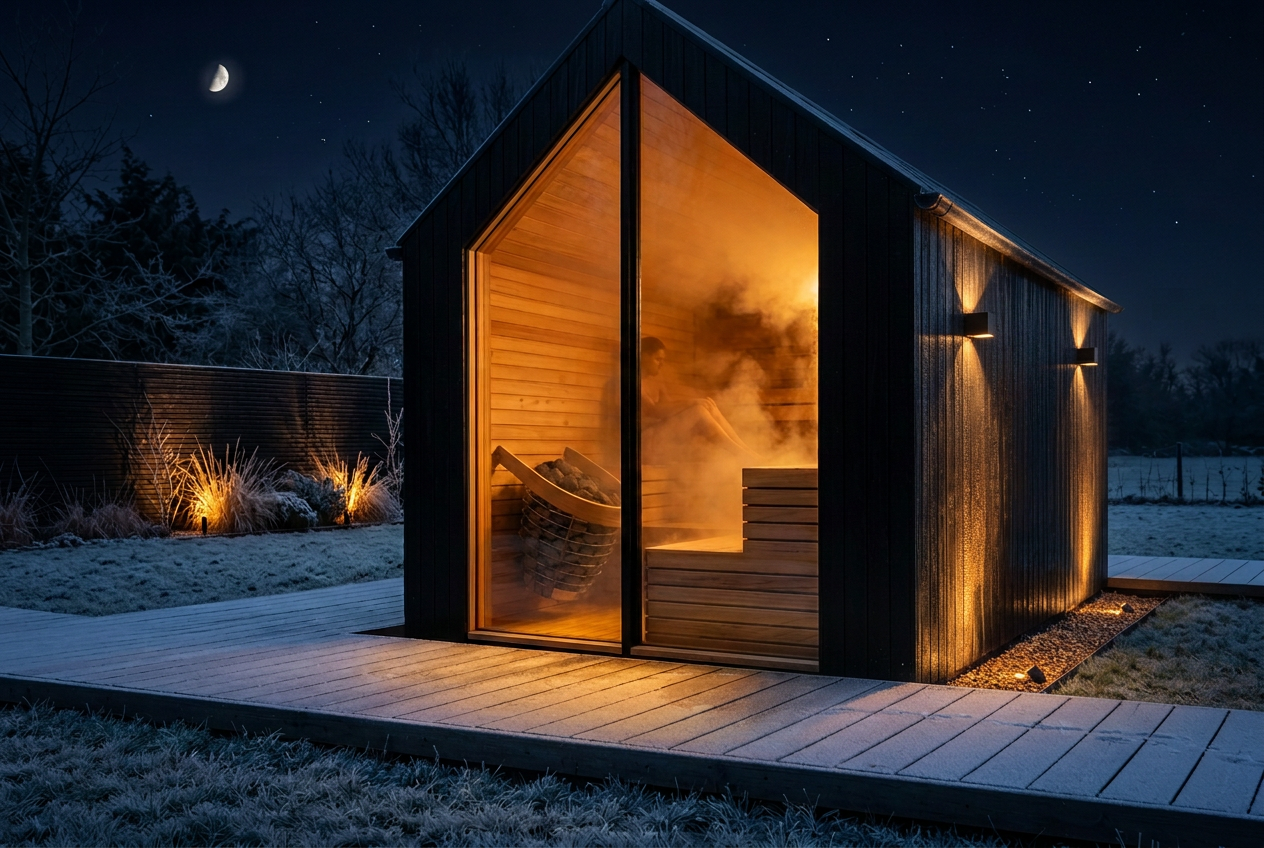
Think in three layers. The route layer marks the path — a rhythm of small, dim, evenly spaced pools of light on the ground. The edge layer gives the space its boundaries, grazing a screen or hedge so the garden has walls after dark. The destination layer is a single slightly brighter moment where you are going: the sauna door, the terrace, a tree.
Each layer should be on its own circuit and, ideally, its own dimmer. On a Sunday evening you might want only the route. Hosting, you want all three. This is not extravagance; it is what makes lighting feel designed rather than switched on.
Lighting a sauna without ruining the view
A sauna presents a particular problem. It has glass, and glass at night becomes a mirror the moment the interior is brighter than the exterior. Sit in a well-lit sauna looking at a dark garden and you will see mostly yourself. Two things solve it: keep the interior lighting genuinely dim and hidden — under benches, behind a backrest, never overhead — and place a small amount of warm light outside the glass, on a tree trunk, a screen or planting, roughly eight to fifteen metres away.
That exterior light gives the eye something to focus on beyond the reflection, and the view opens up. It is the same trick used in restaurant design and it costs one fitting.
Beam angles, shielding and the neighbour test
Narrow beams, deep shielding and honest aiming keep light where you want it. A 10° to 24° beam from a well-recessed fitting will graze a timber screen dramatically; a 60° flood will simply wash everything flat and spill into the next garden. Walk your scheme from your neighbour's side of the boundary before you sign it off. If you can see the source, so can they, and light pollution is both a nuisance and, in the UK, potentially a statutory one.
There is an ecological argument too. Warm, low, shielded, timed lighting is markedly less disruptive to bats, moths and other nocturnal wildlife than bright cool floodlighting — a reason to put the whole garden on a timer or astro-clock and let it go dark after eleven.
The single best upgrade
If you already have garden lighting and want it to look better tomorrow, do this: turn half of it off, dim the rest by 40 per cent, and replace any lamp above 3000K. Almost every scheme we see is over-lit and over-cooled. Subtraction is the fastest route to a garden that looks considered in the dark — and to a sauna you can actually see out of.